Lead Response Time: Why the Fastest Reply Wins the Deal (and How to Always Be First)
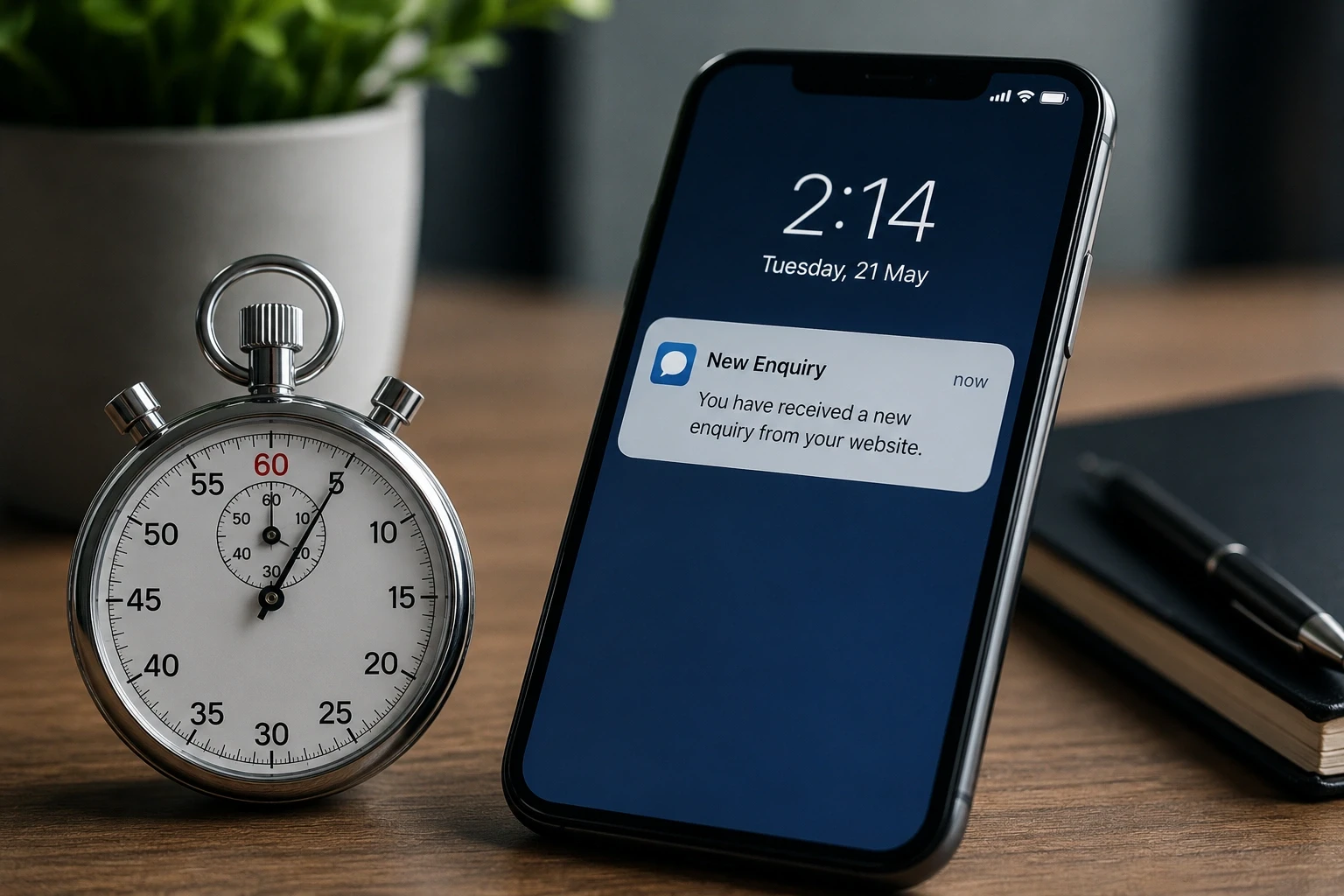
Picture this: someone visits your website at 9:47pm, fills out your contact form, and sits there, wallet practically open. At that exact moment they are the warmest they will ever be. Every minute that passes, they cool. By morning they're lukewarm. By the time your "Thanks for reaching out!" email lands two days later, they've already signed with the competitor who replied while their kettle was still hot.
This isn't a hypothetical. It's the statistical norm. The median B2B lead response time is 42 hours. Not minutes — hours. Forty-two of them. Meanwhile, 78% of buyers choose the vendor that responds first.
Read those two numbers together and you'll see the opportunity: in most markets, you can out-convert competitors not by being better, but simply by being awake. Here's the full case, plus the weekend project that fixes it forever.
The numbers, and they are ridiculous
Speed-to-lead research has been piling up for over a decade, and it all points the same direction — steeply:
The five-minute cliff. Leads contacted within five minutes are 21 times more likely to qualify than leads contacted at the 30-minute mark. Not 21 percent better. Twenty-one times.
The conversion gap. Companies that respond within 5 minutes convert leads to opportunities at around 21%. Wait 24 hours and that drops to 2.3%. Same lead, same product, same pitch — a 9x difference from timing alone.
The first-responder prize. Between 35% and 50% of all sales go to the vendor who responds first. Being first isn't a tiebreaker; it frequently is the sale.
And yet. Only about 7% of B2B companies actually hit the 5-minute benchmark, while 35% take longer than a full day. The bar is on the floor and almost nobody is stepping over it.
Buyer patience is shrinking too — 64% of consumers now expect real-time responses when they contact a business, up from 58% just a few years ago. The market is moving toward "instant" while the average company is parked at "eventually."
Why speed works (it's not just politeness)
The stats make more sense once you understand the three mechanisms underneath:
Attention is perishable. When someone submits an enquiry, you have their active attention — they're thinking about the problem, on your site, in the mood to move. Five minutes later they're in a meeting or watching a video of a raccoon opening a jar. Respond inside the window and you're continuing a conversation; respond tomorrow and you're a cold call.
Speed signals competence. Your response time is the first data point a prospect gets about what working with you feels like. A 90-second reply says "these people have their act together." A two-day reply says "imagine how support tickets go."
First responder frames the deal. Whoever answers first gets to define the problem, set the anchor price, and become the standard every later vendor is compared against. Everyone else is negotiating against your framing.
"Just reply faster" doesn't work (you're a startup, not a call center)
Here's where founders usually nod along and resolve to check their inbox more often. That resolve lasts four days.
The math is against you: leads arrive at night, during demos, on weekends, while you're on a plane. You cannot personally guarantee a 5-minute response 24/7 — and you shouldn't try, because your job is building the company, not refreshing an inbox. Hiring someone to watch the inbox around the clock costs more than most early-stage startups' entire marketing budget.
This is precisely the shape of problem automation exists for: high-frequency, time-critical, rule-based at the first step. (It's why we ranked instant lead response as Level 1 — the automate-this-yesterday tier — in our guide to AI automation for startups.)
The instant-response machine: what good looks like
The goal isn't a robotic auto-reply — "we have received your message" impresses no one and starts no conversation. The goal is a first response that's fast and useful. Here's the anatomy:
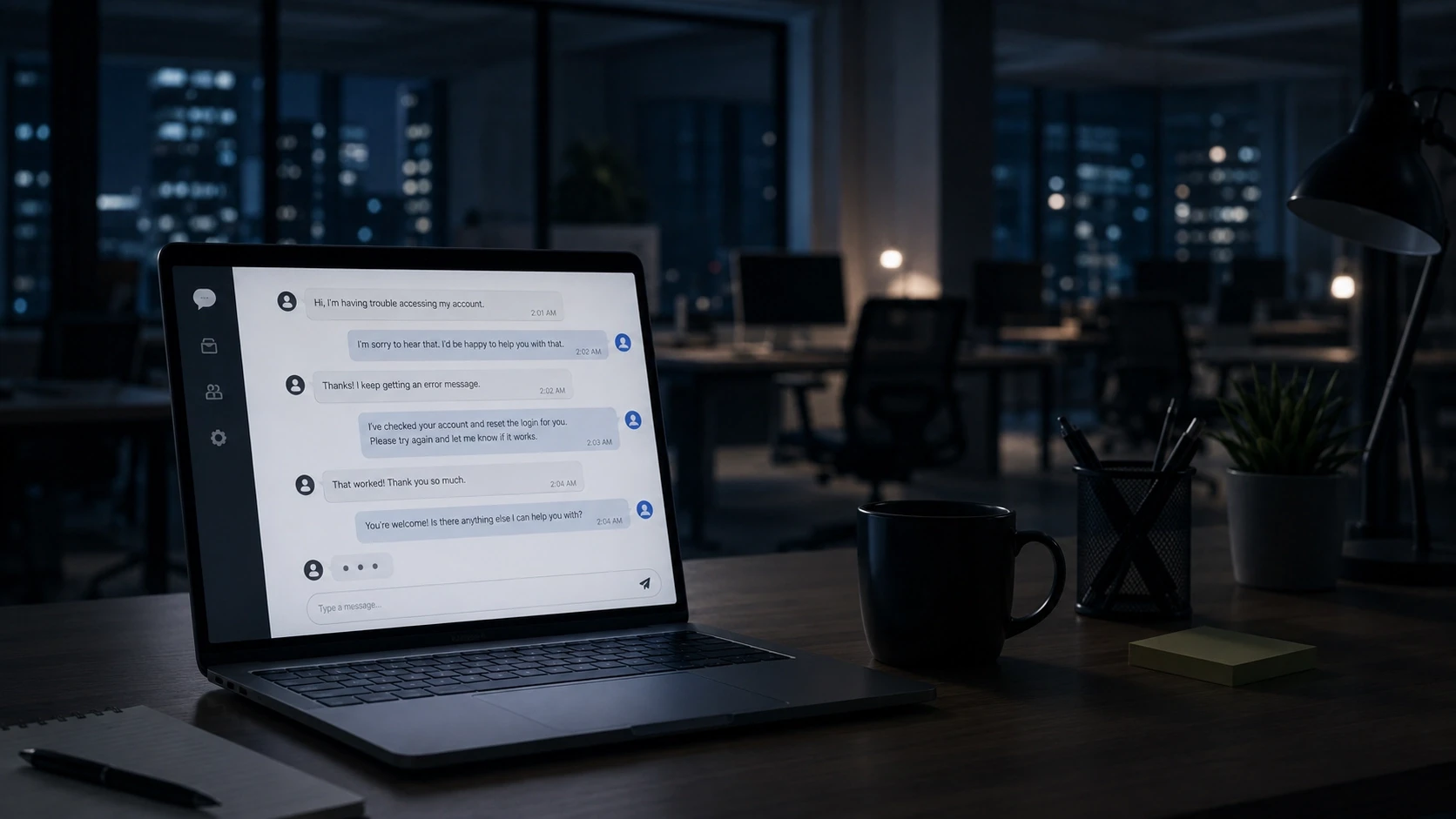
Step 1: Instant, intelligent acknowledgment (0–2 minutes). The moment a lead arrives — form, chat, DM, email — an AI-powered reply goes out that actually engages with what they wrote. It references their enquiry, answers what can be answered immediately, and asks one good qualifying question. An AI layer reading the message and tailoring the reply is what separates "engaging" from "vending machine."
Step 2: Score and route (same 2 minutes). The AI classifies the lead — budget signals, urgency, fit — and routes accordingly. Hot lead? Founder gets a ping with the enquiry summarized and a suggested reply drafted. Casual question? The system handles it and nurtures. Student asking for free consulting? Polite deflection, no human time spent.
Step 3: Human follow-up within the hour (hot leads only). Automation buys you the five-minute window; a human closes the loop with a personal touch while the lead is still warm. You're no longer racing to be first — you already were. Now you're just being good.
Step 4: Persistence without stalking. Most deals need multiple touches, and most founders stop after one. An automated sequence follows up at sensible intervals with actual substance — a relevant case study, an answer to a likely objection — and stops the moment the lead replies or opts out.
A website chatbot slots neatly into step 1 and 2 for visitors who'd rather chat than fill a form — and it's the same infrastructure we covered in our AI chatbot guide, doing double duty for support and sales.
Want this running on your site without building it yourself? This exact system — instant response, AI qualification, smart routing, follow-up sequences — is what Origo builds as part of our AI solutions. Tell us about your lead flow and we'll map your setup.
The weekend build (DIY version)
If you'd rather wire it yourself, here's the minimum lovable version:
Saturday morning: audit your response time. Submit an enquiry through your own website. Time how long until a real answer arrives. This number is usually the motivation you need for the rest of the weekend.
Saturday afternoon: instant first touch. Connect your lead sources (forms, email, socials) to an automation platform. Build one workflow: new lead → AI reads the message → personalized reply sent → lead logged in your CRM (a spreadsheet counts) → notification to your phone. Simplest version that works.
Sunday: routing and follow-up. Add the scoring step — even a crude hot/warm/cold classification beats nothing — and a three-touch follow-up sequence for leads that go quiet: day 1, day 3, day 7. Write those messages once, well, and they'll work while you sleep for years.
Next week: measure. Track two numbers — median response time (should now be under 2 minutes) and lead-to-conversation rate. Compare against your pre-automation baseline. Frame the difference. Hang it somewhere.
Frequently asked questions
What is a good lead response time? Under five minutes. Leads contacted within five minutes are 21x more likely to qualify than those contacted at 30 minutes, and conversion rates fall off a cliff after the first hour. With automation, under two minutes is realistic for any startup — 24/7.
What is the average lead response time? Around 42 hours for B2B companies. Roughly 66% of companies take over an hour, 35% take more than a day, and only about 7% respond within five minutes — which is exactly why fast responders win outsized share.
Does lead response time really affect conversion? Dramatically. Responding in 5 minutes vs. 24 hours is roughly a 9x difference in lead-to-opportunity conversion (21% vs. 2.3%), and 35–50% of sales go to whoever responds first.
How can a small team respond to leads instantly? Automate the first touch. An AI workflow can read each enquiry, send a personalized reply within seconds, qualify the lead, and alert a human for the ones that matter. Humans handle warm conversations; robots handle the stopwatch.
Is an instant automated reply better than a slower personal one? Use both — an intelligent instant reply to catch the attention window, then a personal follow-up within the hour for qualified leads. The automated reply should engage with the actual enquiry, not just confirm receipt.
What tools do I need for lead response automation? At minimum: an automation platform connecting your lead sources, an AI layer to read and draft replies, and a CRM (or even a spreadsheet) to track outcomes. A website chatbot is a strong addition since it engages visitors before they even submit a form.
The bottom line
Most of your competitors will read statistics like these, agree enthusiastically, and change nothing — because "reply faster" feels like a discipline problem, and discipline loses to sleep, meetings, and time zones every single time.
The startups that win this game stop treating speed as a virtue and start treating it as infrastructure. One weekend of setup buys you a permanent, unfair head start on every lead, forever, including the ones that arrive at 9:47pm.
Be the first responder. Every time. Without being awake for it.
That's the business we're in: Origo Studios builds AI automation systems and marketing engines that make brands faster than their headcount. See our projects or get in touch — tell us where you are, we'll take it from there.